
Cardiology
Cardiologist in Sharjah
Understand your heart health. Know your next step.
A change in your heartbeat, repeated high blood pressure readings or getting breathless more easily can leave you with questions. A cardiology consultation gives you time to discuss those concerns and understand whether you need tests, treatment or follow-up.
At Lifeline Clinic Abu Shagara, Dr. Kontractor Sulaiman provides cardiology consultations in Sharjah, with a focus on non-invasive assessment, cardiovascular risk and ongoing heart care.

Heart care starts with understanding what has changed
Perhaps your blood pressure has remained high despite treatment. You may have noticed a racing heartbeat, received an abnormal test result or been advised to see a heart specialist. You might also want to understand your risk because heart disease runs in your family.
Your consultation starts with your concerns. The cardiologist reviews your symptoms, medical history, medicines and previous results, then explains what needs attention.
The aim is to help you understand your heart health and leave with a clear plan: what the findings mean, whether further investigation is needed and when to return for review.

Meet Dr. Kontractor Sulaiman
Consultant Cardiologist in Abu Shagara, Sharjah
Dr. Kontractor Sulaiman has an experience of more than 40 years in general practice and non-invasive cardiology, which includes practice in the UAE, India, UK, and Saudi Arabia.
His qualifications include:
- MBBS – Banaras Hindu University, India
- MD – Delhi, India
- MRCP – United Kingdom
His areas of experience include cardiovascular risk assessment, echocardiography, stress testing, Holter monitoring and medical care before and after surgery. For patients managing an existing condition, follow-up provides an opportunity to review symptoms, discuss medicines and assess changes in health over time.
Languages: English, Urdu, Arabic and Kannada.
When should you see a cardiologist?
A cardiology appointment may be appropriate if you have:

Cardiology consultations and ongoing care
High blood pressure assessment and management
Managing blood pressure involves more than checking one reading. Your cardiologist can review readings taken over time, your current medicines and other factors that may affect control. Bring your home blood pressure record and monitor, if you use one. This can help the doctor understand the pattern and discuss a suitable treatment and follow-up plan.
High cholesterol and cardiovascular risk
A cholesterol result is considered alongside your wider health picture, including blood pressure, diabetes, smoking, family history and any existing cardiovascular disease.
Your consultation can help you understand what your results mean and whether lifestyle changes, medicines or further monitoring are appropriate.
Palpitations and irregular heartbeat
Palpitations may feel like pounding, fluttering, racing or missed beats. Tell the doctor when they happen, how long they last and whether they occur with dizziness, chest discomfort or breathlessness. Based on your symptoms and initial diagnosis, the cardiologist will suggest an ECG or other analysis of your heart rhythm.
Review of existing heart conditions
If you have previously been diagnosed with coronary artery disease, a heart valve problem, a rhythm disorder or heart failure, regular medical review can help monitor your condition.
Bring previous cardiology letters, hospital discharge summaries and test reports so the doctor can understand your treatment history and advise on ongoing care or further specialist referral.
Heart tests: what they can tell you
Heart tests answer different questions. Your cardiologist recommends investigations based on your symptoms and clinical assessment; every patient does not need every test.
ECG test in Sharjah
An electrocardiogram, usually called an ECG, records the heart’s electrical activity. Small electrodes are placed on the skin to record signals that help assess heart rate, rhythm and certain other abnormalities. The recording is usually quick and painless. Your doctor interprets it alongside your symptoms and medical history. An ECG alone cannot rule out every heart condition.

Echocardiogram in Sharjah
An echocardiogram, or echo, uses ultrasound to produce moving images of the heart. It helps assess the heart’s chambers, valves and pumping function. During a standard chest echocardiogram, a healthcare professional moves an ultrasound probe over the chest using gel. The test does not use X-rays. Your cardiologist may recommend an echo when examination findings, symptoms or previous results suggest that more information about the heart’s structure or function would be useful.
Treadmill test: assessing the heart during exercise
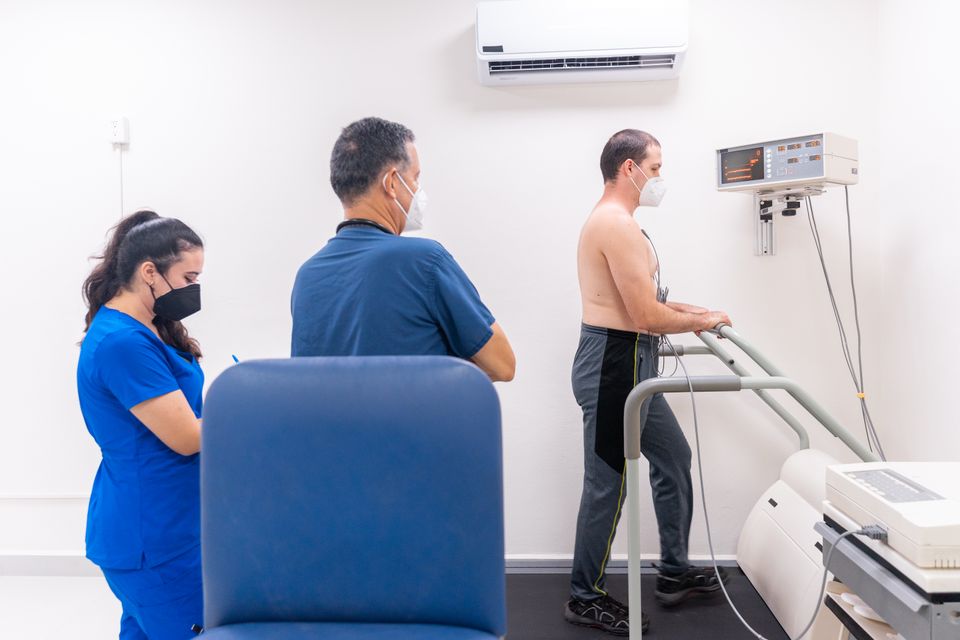
A treadmill test, also called TMT or an exercise stress test, assesses how the heart responds to physical activity. During the test, a healthcare team monitors the ECG, heart rate, blood pressure and symptoms as exercise intensity increases. It is appropriate for selected patients. Before recommending it, the cardiologist considers your symptoms, health conditions, medicines and ability to exercise.
Ask the clinic for preparation instructions when a test is arranged. Do not stop or change prescribed medicines unless the treating clinician tells you to.
A heart check-up based on your personal risk
You do not need to wait for symptoms to discuss cardiovascular risk. High blood pressure and high cholesterol may be present without obvious warning signs. A preventive review may be useful if you have diabetes, smoke, have a strong family history of heart disease or have been advised that your cardiovascular risk is raised. At your appointment, the doctor can review available results and discuss practical priorities. These may include blood pressure control, cholesterol treatment, physical activity, food choices and support to stop smoking.
The appropriate checks depend on your circumstances. A useful heart check-up answers your health questions rather than simply adding tests to a package.
Ask about a heart check-up →
What to expect at your appointment
Please bring:
- Your current medicine list, including supplements.
- Previous ECGs, echocardiograms and blood test results.
- Hospital discharge summaries or specialist letters.
- Home blood pressure readings, if available.
- Your identification and insurance card, where applicable.
Explain when your symptoms began, how often they occur and whether anything brings them on. Mention changes in your ability to walk, climb stairs or manage usual activities.
The doctor will ask about existing conditions, previous treatment, family history and medicines. A clinical examination and relevant measurements help guide the assessment.
If investigations are appropriate, the cardiologist will explain what they are intended to assess. Some patients need further testing; others may need monitoring or a review of existing treatment.
Your plan may include medicine advice, home monitoring, further investigation, follow-up or referral. Ask about anything you do not understand, including when to seek urgent help.
Frequently asked questions
Who is the cardiologist at Lifeline Clinic Abu Shagara?
Can I see a cardiologist for high blood pressure?
Do I need a heart check-up if I feel well?
What are the differences between an ECG and an echocardiogram?
Will I need tests at my first appointment?
How much does a cardiology consultation cost?
Am I able to use my insurance for the appointment?
How do I book a cardiologist appointment in Sharjah?
Make time for the questions you have about your heart
Whether you need help with blood pressure, a review of previous results or ongoing care for a heart condition, start with a consultation at Lifeline Clinic Abu Shagara.
